Simple Meal Formulas for Cooking Without Recipes
When I first had to cook for myself in my college apartment, I’d turn to very easy, basic meals. Pasta, potatoes, etc. When I finally had a kitchen where I was the main person using it (still shared but a story for another day), I’d become obsessed with a specific ingredient and then research how to cook it. I’d look at several different recipes, taking and leaving what looked interesting to me, making up my own cooking method. Things generally turned out pretty good!
This is how I started cooking without recipes. (And that’s also partly why when I share recipes here, I don’t give exact measurements.) But I’ve learned that having a few simple formulas under your belt helps ease decisions after those long, hard days.
Perhaps you can relate to feeling stuck standing in front of the open fridge after a long day. You have food, you're not short on ingredients, but nothing in front of you looks like an actual, full meal. You’ve unknowingly fallen for the lie that without a recipe telling you what to do, you feel like you don't actually know how to cook.
Most recipes are written for someone else's kitchen, someone else's household size, someone else's pantry and someone else's night. Following them precisely, every time, is a lot of mental load for a regular ol’ Tuesday dinner. And, it can subconsciously convince you that cooking without one means you’re somehow cooking wrong.
That’s where meal formulas will help you out: simple, repeatable patterns that flex around whatever you already have. These are not fixed instructions and once you know a handful of them, cooking without recipes goes from feeling like you’re flying by the seat of your pants without a parachute to feeling like something you not only get a hang of, but that you're actually good at.
Here are four formulas to start with, how to build a pantry around them and where to begin this week.
✉️ A Gentle Weekly LetterIf you're creating a home that feels thoughtful, welcoming and deeply your own, you're invited to join Singlenesting Letters. Each week, I share reflections on homemaking, simplicity, creativity and seasonal everyday rhythms. |
What a Meal Formula Is and Isn't
A meal formula isn't a recipe with the measurements removed and it’s also not cooking with any structure at all. Think of it more as a ratio; a pattern you can apply to whatever's on hand, so the decision-making happens once and not every single night.
- It's a formula: protein + vegetable + starch + cooking fat, in whatever quantities and combinations you have.
- It's not a recipe you have to follow exactly, ingredient for ingredient.
- It's not the absence of a plan. It's a plan flexible enough to survive a real week.
- It’s full of ingredients and flavors you know you love and bring you comfort.
📚 Recommended Reading→ Cooking for One Without Waste: 8 Simple Ways to Create a Gentle Kitchen Rhythm |
The Mindset Shift: Cooking From a Pattern, Not a Page
This is where the 'cooking alone but not lonely' idea shows up most clearly. A recipe tends to assume you’re performing for an audience. You’re trying to impress someone or to feed that someone exactly the way it's written and if you don’t execute precisely, it’s a complete failure. However, a formula assumes only you and it entrusts any adjustments to you.
- Cooking for yourself is an act of care, not a smaller version of cooking for a family, and can become a routine that nourishes both your body and your soul.
- Formulas reduce waste, because they ebb and flow around what's already in your fridge instead of demanding a shopping trip.
Four Formulas to Start With
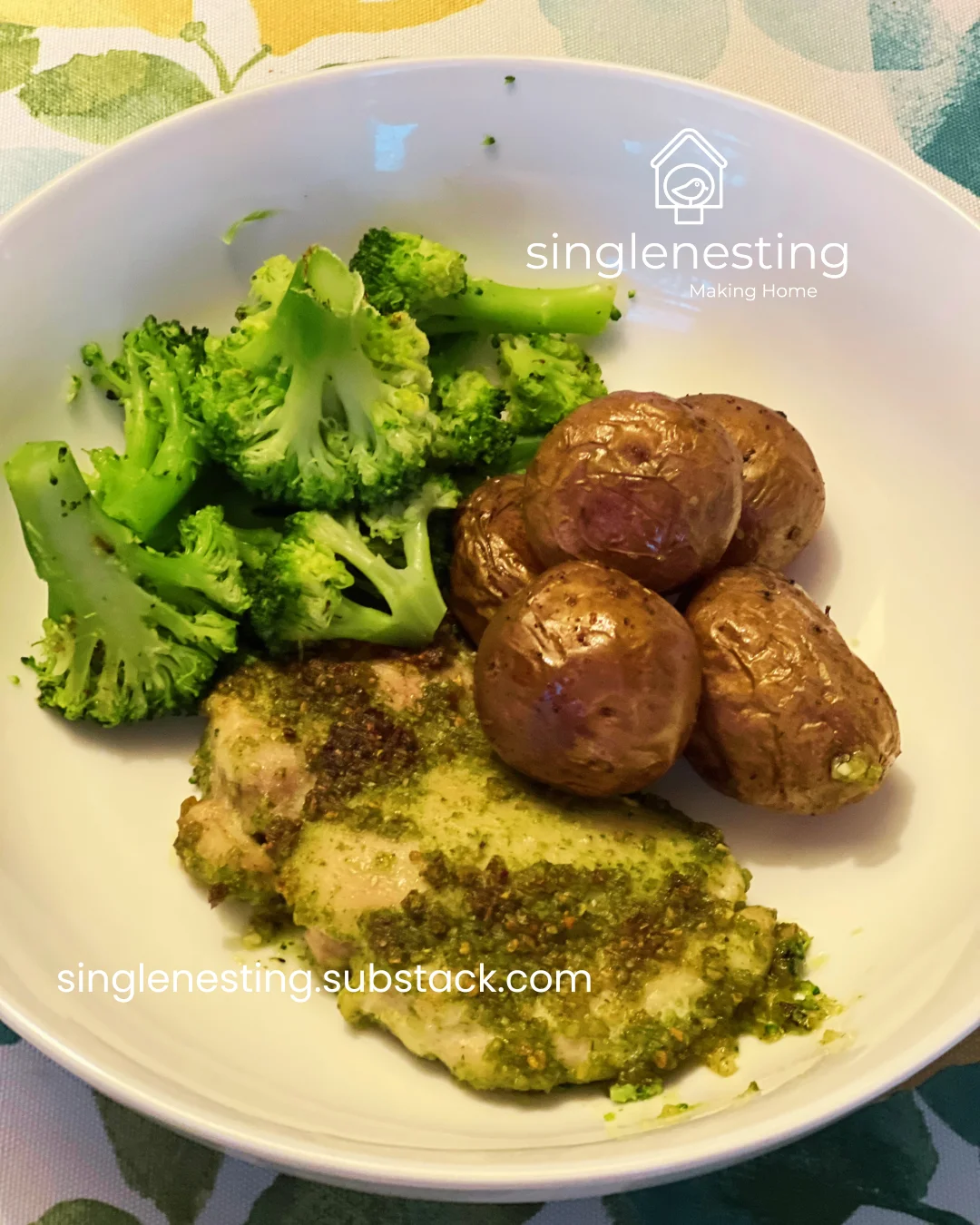
1st Formula: Protein + Vegetable + Starch + Cooking Fat: This is really the easiest. You want some sort of protein, whether animal or plant-based, a green or other colorful vegetable, something starchy like potatoes or pasta and then a healthy fat like grass-fed butter, avocado oil or EVOO. My go-tos are chicken, potatoes and broccoli. Sometimes the chicken is in the form of thighs, sometimes it’s Trader Joe’s chicken sausage. Easy and done. And tasty!
2nd Formula: The Grain Bowl: My go-to grain bowl is a taco bowl. I like to make quinoa as the grain, top it with ground beef with a taco seasoning, add the fixings like chopped tomato, avocado, cheese, jalapeno, shredded lettuce (sometimes I’ll use shredded cabbage instead) and sour cream. It’s filling and so good and any leftovers are good for the week.
3rd Formula: The One-Pan Roast: When I cook chicken thighs without the bone, I like to marinade them in a dressing like Primal Kitchen’s Avocado Ranch for a few hours, then set the oven to 375°, add small potatoes and fresh broccoli and cook it all together. Everything’s on one sheet pan, one oven temperature for the most minimal of cleanup.
4th Formula: The Soup or Stew: I actually got this idea from a family friend and it’s called the “Everything Must Go” soup. You take anything old, but still edible, of course, in your fridge, cut up and put in a broth, add herbs and spices to your taste and you’ll have soup that you can either freeze or enjoy for the next few days. This is great for gently expanding your culinary creativity as you find the flavors that fit well together.
🛒 Solo Kitchen Tools→ A pre-bottled vinaigrette or dressing - great to marinade protein → Rice cooker - enables you to work smarter, not harder → Parchment paper - safer than aluminum foil and makes clean up easier |
Where to Begin
- Pick one formula and cook it three times this week, changing one ingredient each time.
- Build a small pantry around it. One or two good oils, one or two dressings for marinating and a couple of grains saves you from overbuying for a single recipe every night.
- Keep the formula somewhere visible until it becomes automatic.
For example, I’ve gotten pretty good at roasting chicken thighs. I’ve tried them many different ways at this point but I’ve settled on a method that is consistently really good. For the bone-in, skin-on kind, I like to cook them at 400° for about 40 minutes. I place them on a parchment lined sheet pan, use an avocado spray to coat them on either side, salt and pepper the back, use an herb mix on the top, spray with more avocado oil and place it in the oven. Sometimes I’ll convect them for five more minutes at the end, other times I don’t. If I’m baking sweet potatoes, I’ll start those first (give them about a 20 minute start, depending on their size). And then I’ll add some frozen broccoli for the last 15 minutes, right in the pan.
Why This Matters More Than It Seems
Your kitchen doesn't need to run on precise instructions to be a place that feeds you well. What it does need, though, are:
- A few patterns you trust, not a library of recipes you feel obligated to follow.
- Freedom to adjust as you go.
- The knowledge that cooking for one is valid and valuable cooking. It’s not a smaller or lesser version of it.
📚 Recommended ReadingMore from At the Table: · How to Actually Enjoy Cooking for One: A Guide to the Solo Kitchen — things to consider when you’re cooking solo · Easy Brew Iced Tea — for these late summer days More from Simple Living: · What Simple Living Actually Looks Like When Your Home Doesn’t Look Like Everyone Else’s — if you live alone or in a non-traditional shared household, this is for you |
✉️ JOIN THE NEWSLETTERCome Find Us in Your InboxIf you're creating a home life that feels thoughtful, creative and deeply your own, you're invited to join Singlenesting Letters. Each week, I share gentle and reflective thoughts on homemaking, simplicity and the art of living well at home.
|
🔎 SEARCH THE SITELooking for more on the solo or shared kitchen? Explore the At the Table archives and find what resonates. |