What to Always Have on Hand for Easy, Last-Minute Meals
There's often a moment when you open the refrigerator, stare at its contents and feel the quiet weight of having to figure out dinner. Again, just for yourself.
The produce you bought with the best intentions is half-wilted. There's no real "meal" in sight, just a bunch of random ingredients that seemed great at the store but don't seem to belong together. It can feel more like a puzzle than a pleasure.
Somewhere in that awareness, though, a shift begins: what if the kitchen could feel ready for you, even when you hadn't planned ahead? What if a well-stocked pantry could do some of that thinking for you?
That's what this post is about! The simple, reliable staples that make solo cooking feel less like a burden and more like a quiet kind of care.
💌 Join the Newsletter
If you're building a kitchen rhythm that actually works for one, you're invited to join Singlenesting Letters. Weekly reflections on homemaking, simplicity and everyday rhythms set straight to your inbox.
What "Pantry Staples" Actually Means for Solo Living
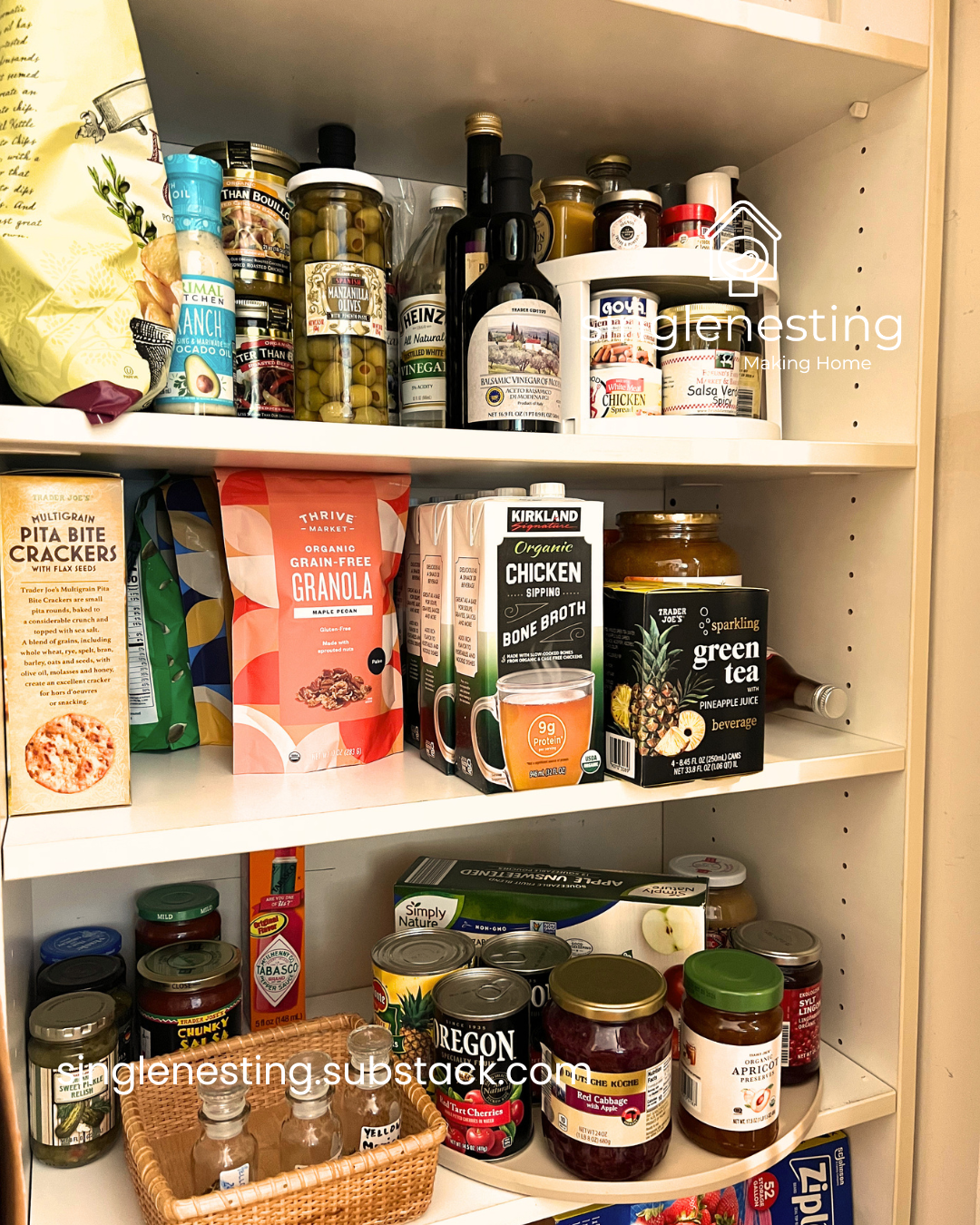
Pantry staples for one aren't the same as a family stockpile. They're not about having everything. They're more about having the right things in small, usable quantities that won't go to waste.
A solo pantry might look like:
- A handful of grains and legumes in small jars or bags
- A few good condiments and sauces that work across many meals
- Canned goods chosen for versatility, not variety for its own sake
- Dried herbs and spices that turn simple ingredients into something satisfying
- A small freezer section that acts as backup for fresh ingredients
📖 Recommended Reading
- Cooking for One Without Waste: 8 Simple Ways to Create a Gentle Kitchen Rhythm
- From the Archives - Crispy Baked Chicken Thighs
- From the Archives - Summer Pimm’s
The Simple Difference Between Staples and Clutter
It helps to think of pantry items in a simple way. It also helps to be honest about the difference between what you actually use and what you've been meaning to use.
- True staples are ingredients you reach for weekly, without thinking
- Aspirational staples are things you bought for one recipe and never touched again
A pantry that supports last-minute meals is one where most items are in the first category. The goal here isn't abundance. Rather, it's reliability. A smaller, curated selection of ingredients you know how to use beats a full shelf of things that feel unfamiliar.
Pantry Staples Worth Always Having on Hand
You don't need to stock everything at once. Start with a few categories and build gradually. These are the ones that earn their place in a solo kitchen:
- Grains: Rolled oats, rice (white or brown) and a small pasta or noodle you love. These become the base of dozens of meals.
- Canned legumes: Chickpeas, white beans and lentils. All rinsed and ready. Inexpensive, filling and endlessly adaptable.
- Canned tomatoes: Crushed or diced. The foundation of many quick sauces, soups and one-pan dinners.
- Good olive oil: For cooking, drizzling and finishing. Worth buying one you genuinely enjoy.
- Soy sauce or tamari: A few drops change the depth of almost anything savory.
- Eggs: The most reliable last-minute meal on their own: scrambled, fried or turned into a simple frittata.
- Garlic and onions: Fresh, at the ready. Most good meals start here.
- Dried herbs and spices: Cumin, smoked paprika, Italian seasoning, red pepper flakes and a pinch of something warming like coriander go a long way.
- Broth or bouillon: For soups, grains and pan sauces. Store-bought is perfectly fine!
- Freezer backup: A bag of frozen peas, corn or edamame and ideally one protein option. Could be a piece of fish, some shrimp or a portion of chicken.
🫙 Pantry Tools You’ll Need
- Small glass jars for grains and legumes
- A compact spice rack or drawer organizer
- Stackable pantry bins for canned goods
- Reusable freezer bags for portioned proteins
How to Use These Staples for Last-Minute Meals
If you're not sure where to begin, start small.
You might:
- Cook a pot of rice or grains at the start of the week and keep it in the fridge, ready to pair with whatever you have
- Open a can of chickpeas, toss them with olive oil and spices and roast them while you figure out the rest
- Make a quick broth-based soup with whatever vegetables need using, a can of white beans and a handful of pasta
- Scramble eggs into leftover grains with soy sauce, a little sesame oil if you have it, and frozen peas
- Simmer canned tomatoes with garlic and herbs for fifteen minutes, then serve over pasta with whatever protein you have on hand
For more on building a rhythm around cooking for one, read the anchor post: Cooking for One Without Waste: 8 Simple Ways to Create a Gentle Kitchen Rhythm.
Your Kitchen Doesn't Need to Be Ready for Every Occasion
Your home doesn't need to be prepared for every possible meal, every craving, every ingredient a recipe might call for.
It simply needs to:
- Support the meals you actually make most often
- Reduce the friction between hunger and eating something good
- Reflect the way you cook and not an idealized version of a cook you haven't become yet
A pantry that works for your life is one that's sized to your appetite, your schedule and your habits. And that's enough.
🥘 Simple Kitchen Favorites
- A good 2-quart saucepan for single-serve soups and grains
- One reliable cast iron or nonstick skillet
- A wooden spoon you actually love using
Recommended Reading
- Our Top Three Crowd Favorite Appetizers
- From the Archives - Oma’s Hungarian Cucumber Salad
- From the Archives - Pickling
📨 Join the Newsletter
If you're looking for a slower, more intentional approach to solo home life, you're invited to join Singlenesting Letters. Each week, I share thoughtful, practical ways to create a home that feels calm, supportive and your own.
🔎 Search the Site
Looking for more ideas on solo cooking and kitchen rhythms? Explore the archives and find what resonates!