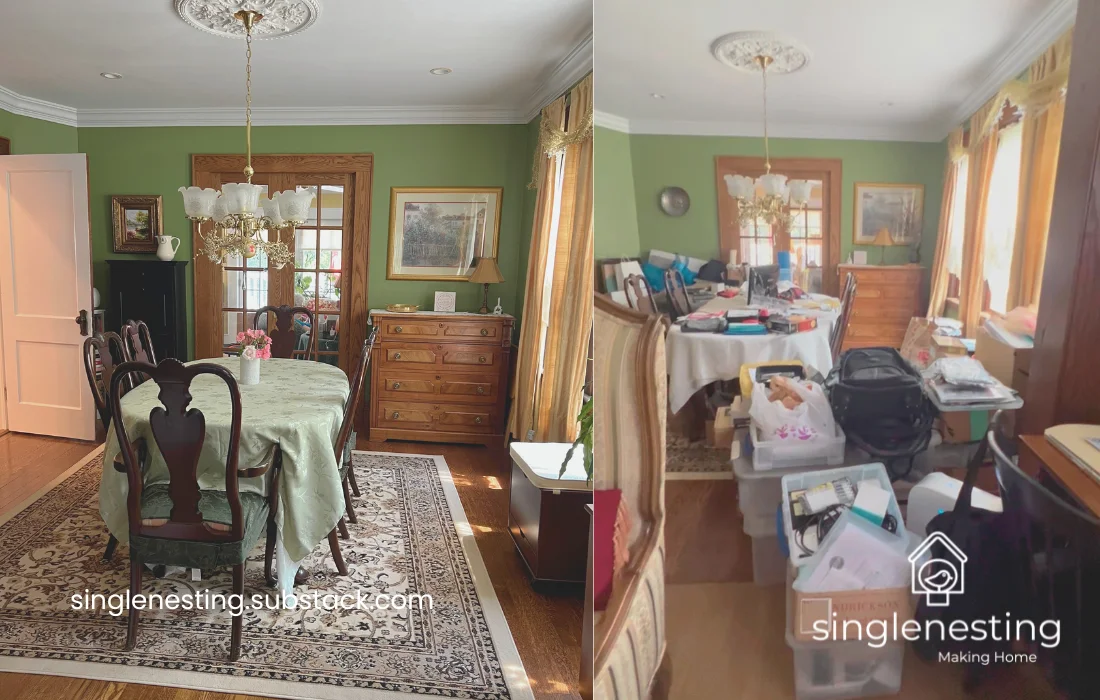
How to Organize a Home You Share: Practical Ideas for Multigenerational and Shared Living
It’s been my experience that most advice on organizing your home begins with an assumption. The assumption usually goes as follows: there’s one family unit, one, or two, decision makers who share a vision for how the home should function.
What about the many of us who live differently?
We may share homes with roommates. We may live with aging parents. We may return to family homes as adults. We’ve combined households after major life changes. We’ve created homes that include multiple generations, multiple routines and multiple ideas about where the scissors belong and which ones should only be used for food and food packaging and which ones only for packaging from outside.
In these situations, organizing is rarely about achieving a picture-perfect result. It's really more about helping people live well together.
We’re not in the business of creating a home where everything looks identical here. However, we are in the business of creating a home where people can find what they need, navigate daily life with less irritation and feel respected within a shared space.
Today, let’s explore practical approaches to home organization that acknowledge the realities of multigenerational and shared living.
✉️ A Gentle Weekly Letter
If you're creating a home that feels functional, supportive and uniquely your own, you're invited to join Singlenesting Letters.
Each week, I share thoughtful ideas on homemaking, organization, simplicity and seasonal everyday living.
→ I'd Love a Gentle Weekly Letter
Shared Home Organization Is Different From Traditional Organizing
One of the biggest frustrations I’ve encountered with organizing advice is that it often assumes that I have complete control over my environment. I’ve actually never had complete control over my home environment. And in all of my years of living in shared homes, I’ve learned how that advice simply isn't realistic.
You may not be the only person buying groceries. You may not be the only person using the hallway closet. You may not be able to decide what stays or goes.
You may be sharing space with people whose habits, priorities and abilities are different from your own.
That’s why it’s so important to remember that shared home organization isn’t about controlling other people. Unfortunately, because that would make things fantastically easier. But, it’s not realistic or kind. No, shared home organization is about creating systems that support coliving.
It can look like:
- Clear boundaries instead of rigid rules.
- Accessible systems instead of perfect aesthetics.
- Communication instead of assumptions.
- Flexibility instead of permanence.
This distinction matters because organizing becomes much less frustrating when we stop expecting everyone to operate exactly the same way we do.
📚 Recommended Reading
→ Simple Living for Beginners: A Gentle Guide to Starting Slow
→ How to Actually Enjoy Cooking for One: A Guide to the Solo Kitchen
The Most Helpful Shift: Organize for Function, Not Appearance
Many organizing systems fail because they prioritize appearance over use. They also require dedication to maintain the system. If not all members of a household are on board with the maintenance, that system doesn’t work and quickly falls into chaos and a pit of despair.
A beautifully labeled pantry means very little if not everyone respects the order.
A perfectly curated entryway is only useful if it actually accommodates the people entering and leaving the home each day.
In a shared household, function is almost always more important than perfection. This doesn’t mean you have to lose aesthetic, though. Function can still be beautiful.
I’ve found that it helps to think of organization in three layers:
Shared Spaces
These are the areas everyone uses regularly.
For example:
- Kitchens
- Bathrooms
- Entryways
- Living rooms
- Laundry areas
These spaces benefit from simple, obvious systems that everyone can understand.
Personal Spaces
These are the areas where individual preferences matter most.
For example:
- Bedrooms
- Personal desks
- Private storage
- Closets
Keep in mind that not every organizing system needs to be universal. People need ownership too; especially in a shared home.
Transition Spaces
These are the places where shared and personal life overlap.
For example:
- Refrigerator shelves
- Mudrooms
- Linen closets
- Utility rooms
- Garage or basement/attic storage
These spaces can create the most tension and also benefit from the clearest systems.
Five Principles for Organizing a Shared Home
The good news is that you don't need to organize the entire house at once. Ease into this mindset by beginning with these principles.
1. Define Ownership Before Defining Storage
Many organizing problems are actually ownership problems. Before deciding where something belongs, clarify who uses it.
Consider:
- Is this shared?
- Is this personal?
- Is this communal but maintained by one person?
Once ownership is clear, storage decisions become much easier.
2. Make Shared Items Easy to Access
The more people who use something, the easier it should be to find. I know, I know, obviously, but you’d be surprised by how many households accidentally hide frequently used items behind less important belongings.
Here is where you want to prioritize convenience over perfection. If you all use the same cooking oils and salt and pepper while cooking, place these on a pretty, decorative tray by the stove so everyone knows where they belong, can use them easily and put back and then the next person going to the grocery store can replace anything that’s low.
3. Create Zones Instead of Micromanaging
Shared households often function better with broad zones than intricately detailed systems.
For example:
- One shelf per roommate.
- One refrigerator bin per household member.
- One section of the mudroom for each person.
Zones are a wonderful way to provide structure while still allowing individual flexibility.
4. Organize for Different Abilities and Life Stages
Multigenerational households often include people with varying physical needs.
A system that works perfectly for one person may be difficult for another.
Think about:
- Visibility
- Reachability
- Mobility
- Cognitive load
The most successful organizing systems are the ones everyone can use comfortably. And don’t be afraid to try something new, even if it’s always how you’ve done it.
5. Prioritize Maintenance Over Perfection
A sustainable system is more valuable than an ideal one because the true test of organization isn't how it looks immediately after completion. It's whether it still works six months later.
Choosing systems that fit the habits of the household rather than fighting them is how you fortify the atmosphere you’re creating in your home.
🛒 Tools You'll Need
→ Clear bins for shared pantry and refrigerator zones.
→ A simple label maker for common household areas.
→ Open baskets that make frequently used items easy to access.
What This Looks Like in Practice
As we’ve been seeing, shared homes come in many forms. While the details may differ, the principles remain surprisingly similar.
In a Roommate Household
The most effective systems tend to focus on clarity.
Shared kitchen shelves.
Clearly designated refrigerator space.
Simple cleaning supply storage.
A central place for household essentials.
When blending individuals coming from their own household backgrounds, it’s unrealistic to try to create identical habits. Think of it more as reducing daily confusion.
In a Multigenerational Home
Multigenerational households have often accumulated decades of belongings alongside the needs of newer household members. And so, this kind of household requires a gentler approach.
Instead of organizing the entire home at once, focus on high-use spaces first:
- Kitchen work areas and cabinets.
- Entryways.
- Bathrooms.
- Medication storage.
- Household paperwork.
By focusing on improving these spaces, you can create immediate relief without requiring large-scale decluttering.
In Homes With Aging Parents
Organization becomes increasingly connected to accessibility. Keep frequently used items easy to see and reach. Labels may become more helpful. Pathways should remain clear. Storage should reduce strain rather than create it.
In these households, good organization becomes an act of care.
In Shared Homes With Adult Children
Many households today include adult children returning home temporarily or long-term.
The challenge in these households is often balancing independence with shared systems. Adult children may have their own way of organizing and systems they’ve developed over the years, so it’s important to have a flexible mindset. On both sides.
Creating dedicated zones for personal belongings while maintaining clear household organization helps reduce tension and preserve autonomy.
Where to Begin
If you're not sure where to start, begin here:
- Identify one shared space that causes the most frustration.
- Clarify ownership of the items in that space.
- Create simple zones.
- Remove unnecessary complexity.
- Focus on making the system easy to maintain.
Small improvements often create momentum for larger changes. In shared homes especially, progress matters more than perfection. Also bear in mind that it’s ok to take time to understand the organizational needs of each member of the household.
Why Shared Home Organization Matters
Organization is often presented as a visual goal. It’s beautiful and aesthetic; the epitome of a successful household. But in a shared household, its deeper purpose is relational.
A well-organized home reduces stress. It prevents misunderstandings. It helps people find what they need. It communicates respect for the people sharing the space.
Your home doesn’t have to look like a magazine.
What it should do, is:
- Support daily life.
- Reduce resistance.
- Make room for multiple people to belong.
The most successful shared homes aren't necessarily the most rigidly organized.
They're the ones where organization quietly supports the life happening inside them.
🌿 Lifestyle Favorites
→ A “family” command center notebook for household information.
→ Attractive baskets that contain everyday clutter without creating visual stress.
📚 Recommended Reading
More Brilliant Ideas Posts
→ Decluttering Our Family Home Series — Introduction to the series on how I’ve been working through organizing my own family home in a multi-generational household.
→ Decluttering Our Family Home Series: The Dining Room — I’m most proud of how this room turned out. So far!
→ Simple Home Organization and Systems That Make Everyday Life Easier — Why simplicity matters more than complexity.
Related At the Table Post
→ What to Always Have on Hand for Easy, Last-Minute Meals — Navigating food and pantry organization for when you haven’t made it to the grocery store in a while.
✉️ JOIN THE NEWSLETTER
Come Find Us in Your Inbox
If you're creating a home that feels functional, welcoming and supportive, you're invited to join Singlenesting Letters.
Each week, I share thoughtful, practical ways to simplify homemaking and create a home that works for real life.
🔎 SEARCH THE SITE
Looking for more organization ideas?
Explore the Brilliant Ideas archives and discover practical solutions for shared homes and everyday living.