*Post contains affiliate links.
I think I’m a bit of a mood reader. As the weather shifts to cooler temps and fewer sunlight hours, I feel myself in the mood to go back in time to medieval England. Specifically, my fav, the War of the Roses time period.
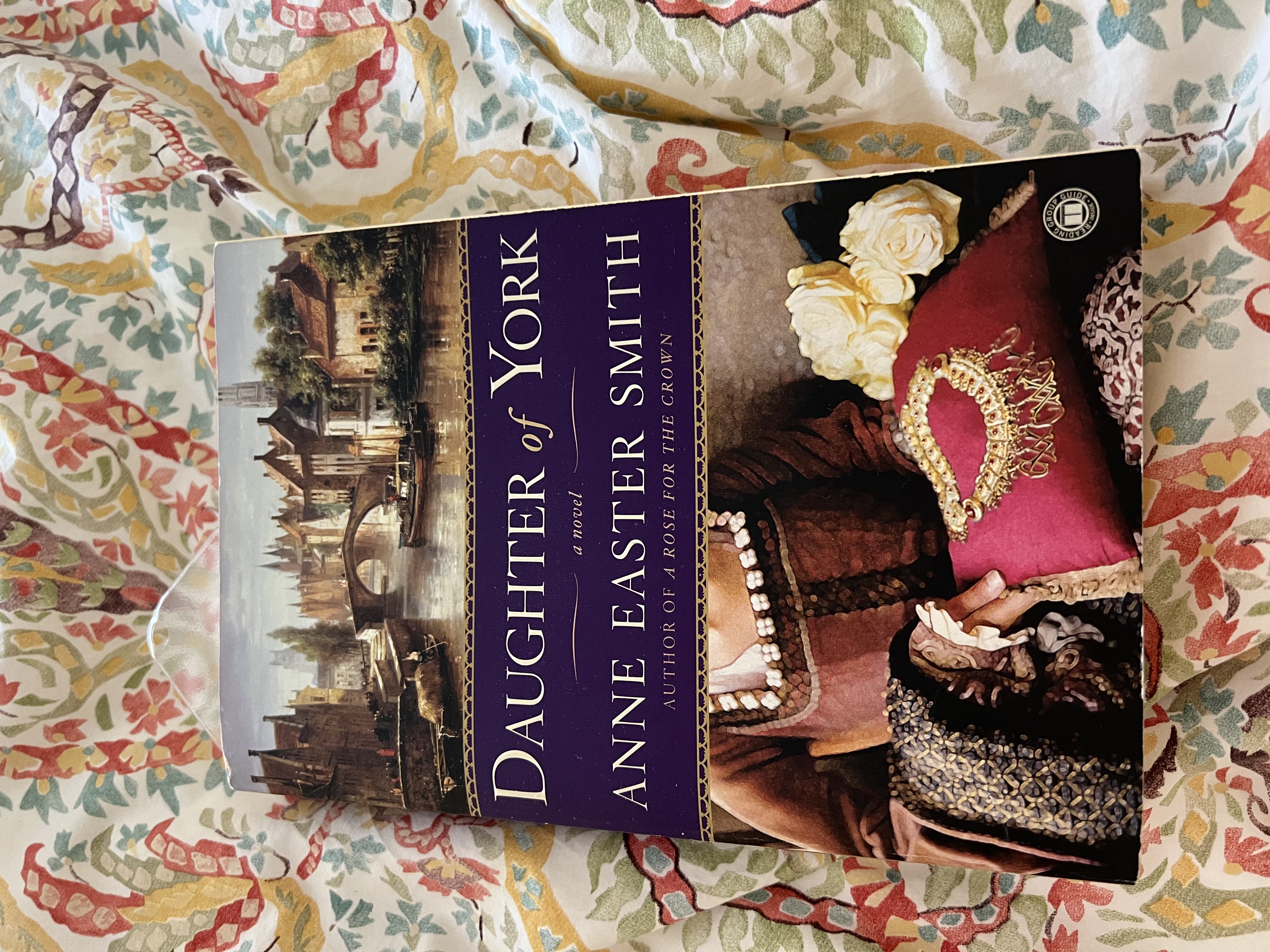
I’ve had Daughter of York by Anne Easter Smith on my bookshelf for years. Most of the historical fiction novels I’ve read about this period have to do with the women who played more central roles during that time. You know, the big names behind the men: the queens and the mothers of kings. All of them formidable and incredibly intelligent women who knew how to leverage their influence and power in a largely male-dominated geo-political environment.
So, it’s an interesting perspective pivot to view the events from a “minor” character. And what I find interesting about the main character in this novel is that she is the sister of King Edward IV. However, that doesn’t make Margaret any less impressive in her own right.
The publisher bills the novel as a peak behind the curtain into Margaret’s heart and the secret love she held during her lifetime.
I haven’t gotten to that part yet, but what I have read so far really struck me because it speaks to what I like to talk about here on singlenesting.
Margaret and King Edward’s mother, Cecily, was one of those formidable historic women who commanded respect. And, what I’ve found interesting so far in this novel is the way that the author shows how Cecily managed the family home. She was not a wilting homemaker, up to her elbows in dirty laundry water. Rather, she was like a CEO, overseeing the entire operation of the family estate. From managing the smooth running of domestic life - meals, cleaning, washing, animal husbandry to judging domestic disputes, auditing finances and ensuring the workings of the vast number of people and “departments” of the estate ran well, Cecily held a lot of power.
And she taught her daughter, Margaret all of these skills. Which, Margaret utilized to run her own household in time.
Even though the official historic documentation may be sparse in terms of women’s roles during this time period (or any, for that matter), I find it fascinating to learn about what life was like for women living in earlier ages. The glimpses we get to witness through historic fiction often leads to further research in which you can find more details. Because, those glimpses do exist. It’s often a matter of how far you’re willing to dig yourself.
My takeaway, so far from this novel, is how important domestic management is to the survival of civilization and our cultures. Everyone has to eat. Everyone one needs a place to sleep. Everyone needs a roof over their head and to protect their stuff. Everyone needs cleanliness in their home environment for health - physical, mental and emotional. Everyone needs an environment that’s safe and full of love.
For some people, safety looks like being completely clutter-free and minimalistic. For others it may look like surrounding themselves with items they love and are full of memories and sentiment. Whatever it looks like for you individually, the overarching purpose is that, as homemakers, we get to be the gatekeepers and arbiters of our home management style.
I did not expect my current read to land here, but so it goes!
If you didn’t know already, I’ve moved my weekly newsletter over to Substack! I’ve also given it a name. I invite you to subscribe, for free!, to Singlenesting Letters on Substack. Every Saturday morning you’ll receive a little note into your inbox from my home to yours that’ll ease you gently into the weekend. I’d love it if you joined me over there and supported the work I do by subscribing. Thanks, friend!
Click here to subscribe to Singlenesting Letters on Substack!